Minecraft and the People Who Play It
Something happened in our family that sooner or later happens in every home with kids: our daughter discovered Minecraft. She’s 10, and over the past few months she’s gone from “What do I even do here?” to building complex farms, breeding animals, and epic battles with monsters.
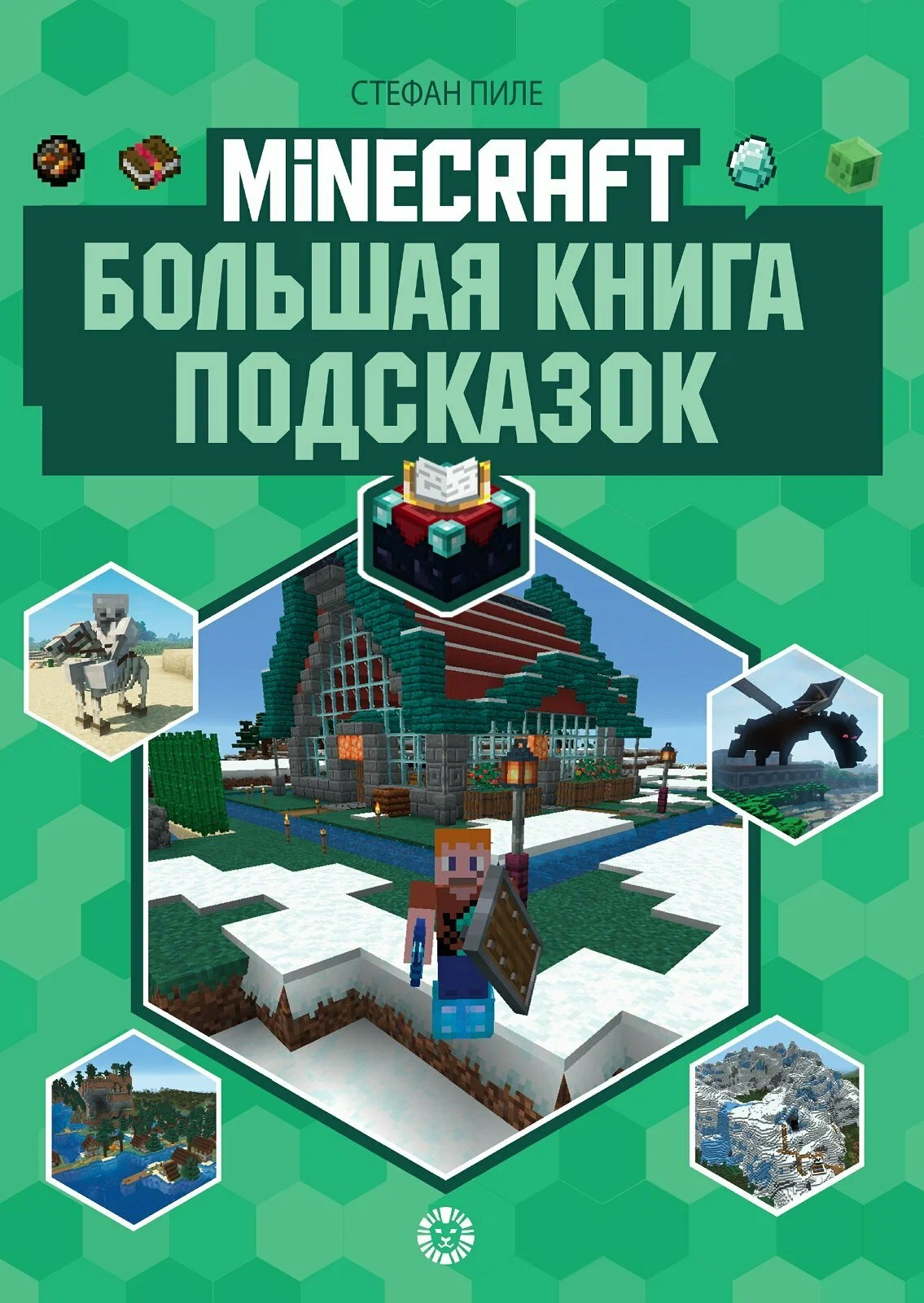
But the most surprising thing is not the game itself — it’s what happens around it. At the library she found Stephan Pilet’s “Minecraft: The Big Book of Tips” and now reads it on weekdays, planning her strategy for the weekend.
Nearly all our friends aged 5 to 25 know the game too, so there’s always someone to discuss tactics with, exchange secrets, and brainstorm together. This is not simply “staring at a screen” — it’s a full-fledged environment for learning, planning, socialization, and creativity.
The book doesn’t create static stories in her head — it’s a true immersion into a beautiful virtual world with feedback, consequences for every decision, and a practically infinite space for experiments.
And that got me thinking: how did a game written by a single programmer in Java in under a week become the best-selling video game in history? And a tool used by schools in 115 countries?
From Cave Game to $2.5 Billion
One Programmer and One Week
Markus “Notch” Persson was born in Stockholm in 1979. His father — a “real geek,” as Markus recalls — built his own modem and taught his son to use a Commodore 128. At 7, Markus started programming, and at 8 he created his first text adventure game.
"I'm not an entrepreneur. I'm not a CEO. I'm a nerdy programmer who likes having an opinion on Twitter."
--
Markus Persson
By 15 he knew for certain he wanted to make games. But he never finished high school — he went on to study graphic design, then worked at Midasplayer (the future creators of Candy Crush), developing browser-based Flash games.
In 2009, Markus discovered Infiniminer — a blocky resource-mining game — and was struck by an idea: “A fantasy game in this style should work even better!” He took code from his previous prototypes and in under a week built a basic first-person engine.
The first name? Cave Game. Then Minecraft: Order of the Stone. And finally, just Minecraft.
Key Milestones
| Date | Event |
|---|---|
| May 2009 | First publication of Cave Game on forums |
| January 2011 | 1 million paying users |
| November 2011 | Official release 1.0 - already 4M copies sold |
| December 2011 | Notch hands leadership to Jens "Jeb" Bergensten |
| September 2014 | Microsoft acquires Mojang for $2.5B |
| 2016 | Launch of Minecraft Education Edition |
| 2023 | 300M+ copies sold, ~212M monthly active players now |
The Creeper — Born from a Bug!
One of the most recognizable enemies in video game history was born by accident: Notch was trying to model a pig but mixed up the length and height. Instead of a pig, he got a tall thin creature on four legs. Rather than fix the bug, Markus painted it green — and the Creeper was born :)
In September 2010, Notch visited Valve's headquarters and received a job offer. He declined, to keep working on Minecraft. Four years later, his studio was bought for $2.5 billion.
Why the Whole World Plays
Mind-Boggling Numbers
Minecraft is the best-selling video game in history: over 350 million copies worldwide. Monthly active audience — about 212 million players. For context: that’s more than the population of Brazil, the seventh most populous country in the world.
In China, the localized version “My World” has amassed 700M+ registered accounts. And the Minecraft Marketplace has earned content creators over $350 million as early as 2021.
Who Plays?
| Age Group | Share of Players |
|---|---|
| Under 15 | 21% |
| 15-21 (largest group) | 43% |
| 22-30 | 21% |
| 30-65 | 15% |
According to various statistical surveys, about 39% of the audience plays on mobile, 30% on PC, 31% on consoles. Geography: USA (21%), Brazil (6%), Russia (6%).
The Secret of Universality
Why does Minecraft equally captivate a five-year-old child and a twenty-five-year-old engineer? The answer lies in the absence of imposed goals:
- Young children (5-7) enjoy combinations of colors and shapes — it’s like an infinite LEGO set
- School-age kids (8-12) express imagination through building, cave exploration, and animal breeding
- Teenagers (13-17) dive into Redstone mechanics (electrical circuits), create servers, and modify the game
- Adults apply architectural design, programming, and collaborative projects on the scale of small cities
There’s no “right” way to play. Everyone decides for themselves what to do — and this very freedom creates a flow state, when a person is fully immersed and maximally receptive to learning.
250,000 Mods and a Living Community
The modding community is a critically important engine of Minecraft’s longevity. Major platforms host over 250,000 mods with a combined 100 billion downloads. The most popular mods (OptiFine, JEI, Sodium) reach hundreds of millions of downloads each.
YouTube and Twitch are overflowing with content creators with millions of subscribers. Server communities are born on Reddit and Discord and become spaces for collective creativity. Minecraft has become a cultural symbol of an entire generation.
When a Game Is Education
Lion Cubs, Bear Cubs, and Your Child at the Computer
What do a lion cub pinning its sibling in a play-fight and a child building a farm in Minecraft have in common? Far more than meets the eye.
German philosopher and psychologist Karl Groos formulated an evolutionary theory of play back in the late 19th century:
"We cannot say that animals play because they are young and playful. Rather, they have a period of youth precisely in order to play."
--
Karl Groos
Play is not a side effect of childhood — it’s its cause. Evolution “invented” a long childhood in mammals precisely so that young individuals could safely practice survival skills:
- Lion cubs play-fight and play-hunt — developing coordination and tactical thinking for future real hunts
- Young monkeys learn agility by swinging between branches
- Bear cubs that played more in mock fights show better hunting abilities in adulthood (University of Tennessee study)
- Zebra foals and gazelle calves practice fleeing and evading predators
Why mammals specifically? Because unlike insects and reptiles, their instincts are more flexible and require learning. The more complex the brain, the more “rehearsals” are needed before real life.
Piaget, Vygotsky, and Berne: Three Views on Children’s Play
Jean Piaget viewed play as a vital component of cognitive development. Children acquire understanding of the world through active interaction with their environment — they build their own knowledge base through exploration. In Minecraft, this manifests literally: a child experiments with crafting, discovers recipes, studies mob behavior — and does so voluntarily, for hours on end.
Lev Vygotsky added a social dimension: children learn not in isolation but through interaction with others — especially those who know more. He considered play “the leading source of development” in childhood. When a child discusses strategies with friends of different ages — from five-year-olds to twenty-five-year-olds — that’s exactly what Vygotsky described: learning in the zone of proximal development through social interaction.
Eric Berne, the creator of transactional analysis, described three ego states in his book "Games People Play": Parent, Adult, and Child. All three live within each of us -- and play helps us switch between them.
The parallel with Minecraft is strikingly precise. In the game, children freely switch between all three roles:
- “Parent”: organizes a collaborative project on a server, sets rules, takes care of younger players
- “Adult”: rationally solves engineering problems with Redstone, calculates resources, plans construction
- “Child”: creatively explores the world, experiments, takes risks, enjoys the process
Minecraft essentially serves as a safe sandbox for practicing the social patterns described by Berne, but in a constructive rather than manipulative way. Unlike Berne’s “games”, where participants unconsciously follow destructive scripts, in Minecraft the “scripts” are literally programs and plans that children create consciously.
Four Mechanisms of Learning Through Play
Groos identified four key mechanisms explaining why play is so effective for learning — and all four are present in Minecraft:
- Freedom from consequences — the absence of real risks allows experimentation without fear. In Minecraft you can “die” and try again
- Intrinsic motivation — children practice to play well, not for grades. Motivation comes from within, not from a teacher
- Repetition without monotony — players voluntarily repeat actions, perfecting skills through creative variations. The tenth house is built quite differently from the first
- Cultural adaptation — children incorporate into play what is valued around them. In a world that values technology, they build Redstone circuits
"The educational power of play lies in its triviality" -- education occurs as a natural byproduct, not as deliberate instruction. That's precisely why it's so effective.
Minecraft in Schools: 35 Million Students
This isn’t just theory. Minecraft Education Edition is used by more than 35 million students and teachers in 115 countries. Since 2013, American and Swedish schools have systematically integrated Minecraft into the curriculum — for teaching mathematics, history, urban planning, and natural sciences.
Under the Hood: Technical Magic of the Block World
Two Worlds, Two Languages
Minecraft exists in two main editions:
- Java Edition — the original version, written in Java. Supports modding through the Forge and Fabric frameworks. This is where all key innovations first appear
- Bedrock Edition — written in C++. Unites cross-platform play between Windows, Xbox, PlayStation, Switch, and mobile devices
How an Infinite World Is Created
Every Minecraft world starts with a single number — a seed. This is a 64-bit value yielding 18.4 quintillion unique combinations. The same seed always generates the same world — determinism built into infinity.
The world is divided into chunks — 16 x 16-block sections horizontally, extending the full height (up to 384 blocks after the Caves & Cliffs update). New chunks are generated dynamically as the player moves beyond loaded boundaries — and this is what makes the world effectively infinite (60,000,000 x 60,000,000 blocks).
How does generation work? At its core is Perlin noise: a mathematical function that creates “smooth random” patterns. Minecraft uses several 3D noise maps to determine five “climate” parameters for each point in the world: temperature, humidity, continentalness, erosion, and weirdness. Their combination determines the biome — from snow-capped mountains to tropical jungles.
The full generation pipeline: seed initialization —> noise map generation —> biome determination —> cellular automaton processing —> fractal density mapping —> terrain height calculation —> population (trees, ores, structures). This is a real course in procedural generation — a topic studied in advanced computer graphics courses at universities.
Redstone: A Computer Inside a Computer
Redstone in Minecraft is an analog of electrical wiring. From it you can build logic gates (AND, OR, NOR, XOR), memory circuits (latches, flip-flops), and clock generators.
The advantage for learning: Redstone is “ideal” — it’s always on or off. No need to deal with voltages, capacitances, and inductances — just pure logic. Basic gates combine into adders, adders into arithmetic logic units. A child building an automatic door in Minecraft follows the same path as a first-year electrical engineering student, but without formulas and a soldering iron.
From Blocks to Code
Minecraft isn’t just about building. It’s a natural ladder from a first encounter with logic to writing real programs.
Level 1: Command Blocks
The most accessible path to programming — right inside the game. Command Blocks allow you to automate commands and create complex systems without external tools. Here a child encounters basic concepts: conditions, loops, variables, events — all in the context of “I want my house to open doors automatically”.
Level 2: MakeCode — Visual Programming
Microsoft MakeCode is integrated into Minecraft Education Edition through Code Builder (pressing “C” opens the development environment). This is block programming — like virtual LEGO where colored code blocks connect together.
In MakeCode, a child controls an agent — a programmable helper in the Minecraft world. You write a program from blocks, and the agent performs actions in the world. Gradual transition: from visual blocks to JavaScript and then to Python.
Level 3: Python and Minecraft
The mcpi library (Minecraft Pi Edition API) lets you control the Minecraft world from Python scripts. Through a Spigot server and the RaspberryJuice plugin, a child writes code that builds structures, moves blocks, creates game logic — and sees the result in real time in a familiar world.
from mcpi.minecraft import Minecraft
mc = Minecraft.create()

# Build a stone wall
for x in range(10):
    for y in range(5):
        mc.setBlock(x, y, 0, 1)  # 1 = stone

# Teleport the player up
mc.player.setPos(5, 10, 0)
Minecraft Education Edition includes a Python 101 series — 10 lessons where students help a fictional company CodingMine solve problems: from zero knowledge of syntax to writing functions and mini-games.
Level 4: Java Modding — Real Development
Most Minecraft mods are written in Java through the Forge and Fabric frameworks. This is real object-oriented development:
@Mod("myawesomemod")
public class MyMod {
    public MyMod() {
        MinecraftForge.EVENT_BUS.register(this);
    }

    @SubscribeEvent
    public void onPlayerJoin(PlayerEvent.PlayerLoggedInEvent event) {
        event.getEntity().sendSystemMessage(
            Component.literal("Hello from my mod!")
        );
    }
}
The path from “I want to add a new mob” to “I’m writing a mod in Java” is a natural evolution. A child who started dragging blocks in MakeCode can, within a year or two, be learning a real industrial programming language — and they’ll already have the motivation and context that are so lacking in typical courses.
Roadmap
| Level | Tool | Language | Skills |
|---|---|---|---|
| Beginner | Command Blocks | In-game commands | Logic, conditions, sequences |
| Intermediate | MakeCode | Blocks / JS / Python | Algorithms, loops, functions |
| Advanced | mcpi / Python | Python | Scripting, APIs, automation |
| Expert | Forge / Fabric | Java | OOP, frameworks, real development |
Instead of a Conclusion
When I watch my daughter reading a Minecraft book on weekdays, planning weekend adventures, and then discussing strategies with friends of all ages — I don’t see “a child at a computer”. I see the very learning through play that Piaget, Vygotsky, and Groos wrote about.
A lion cub playing at hunting becomes a lion. A bear cub wrestling with its sibling learns to survive. A child building a farm in Minecraft masters planning, resource management, and the fundamentals of computational thinking — and one day, perhaps, will write their first Java mod.
Minecraft is an environment where principles of learning through play, flow state, social interaction, and real programming all converge — in a format that naturally attracts children and keeps them engaged into adulthood. If somewhere deep within this blocky world my child discovers an interest in code — well, I know who to thank. A Swedish programmer who started writing text games at 7 and never finished high school. And what do you or your children play?
У нас произошло то, что рано или поздно случается в каждой семье: дочка открыла для себя Minecraft. Ей 10 лет, и за последние месяцы она прошла путь от «А как и что тут делать?» до строительства сложных ферм, разведения животных и эпических битв с монстрами.
Но самое удивительное - это не сама игра, а то, что происходит вокруг неё. В библиотеке она нашла книгу Стефана Пиле «Minecraft. Большая книга подсказок» и теперь по будням читает, планируя стратегию на выходные.
Почти все наши знакомые от 5 до 25 лет тоже знают эту игру, поэтому и с ними можно обсуждать тактики, обмениваться секретами и вместе что-то придумывать. Получается это не просто «залипание в экран» — это полноценная среда для обучения, планирования, социализации и творчества.
То есть из книжки получаются не просто статичные истории в голове, а настоящее полное погружение в красивый виртуальный мир - с обратной связью, последствиями решений и практически бесконечным пространством для экспериментов.
И тут я задумался: как одна игра, написанная одним программистом на Java за неделю, стала самой продаваемой видеоигрой в истории? И инструментом, который используют школы в 115 странах мира?
От Cave Game до $2.5 миллиардов
Один программист и одна неделя
Маркус «Notch» Перссон родился в Стокгольме в 1979 году. Его отец - «настоящий гик», как вспоминает сам Маркус - собрал собственный модем и научил сына пользоваться Commodore 128. В 7 лет Маркус начал программировать, а в 8 создал свою первую текстовую приключенческую игру.
«Я не предприниматель. Я не CEO. Я задротский программист, которому нравится иметь мнение в Твиттере.»
--
Маркус Перссон
К 15 годам он твёрдо знал, что хочет делать игры. Но среднюю школу так и не закончил - ушёл изучать графический дизайн, а потом работал в компании Midasplayer (будущие создатели Candy Crush), разрабатывая браузерные Flash-игры.
В 2009 году Маркус обнаружил Infiniminer - блочную игру про добычу ресурсов - и загорелся идеей: «Фэнтезийная игра в этом стиле должна будет работать ещё лучше!» Он взял код из своих предыдущих прототипов и менее чем за неделю создал базовый движок от первого лица.
Первое название - Cave Game. Потом - Minecraft: Order of the Stone. И наконец, просто Minecraft.
Знаковые события
| Дата | Событие |
|---|---|
| Май 2009 | Первая публикация Cave Game на форумах |
| Январь 2011 | 1 миллион платящих пользователей |
| Ноябрь 2011 | Официальный релиз 1.0 - уже продано 4 млн копий |
| Декабрь 2011 | Нотч передаёт руководство Йенсу «Jeb» Бергенстену |
| Сентябрь 2014 | Microsoft покупает Mojang за $2.5 млрд |
| 2016 | Запуск Minecraft Education Edition |
| 2023 | 300+ млн проданных копий, сейчас примерно 212 млн активных игроков в месяц |
Крипер - результат ошибки!
Один из самых узнаваемых врагов в истории видеоигр появился случайно: Нотч пытался смоделировать свинью, но перепутал длину и высоту. Вместо свиньи получилось высокое тонкое существо на четырёх ногах. Вместо того чтобы исправить ошибку, Маркус покрасил его в зелёный - и так родился Крипер :)
В сентябре 2010 года Нотч посетил штаб-квартиру Valve и получил предложение о работе. Он отказался, чтобы продолжить делать Minecraft. Четыре года спустя его студию купили за $2.5 миллиарда.
Почему весь мир играет?
Цифры, от которых кружится голова
Minecraft — самая продаваемая видеоигра в истории: более 350 миллионов копий по всему миру. Ежемесячная активная аудитория около 212 миллионов игроков. Для контекста: это больше, чем население Бразилии, занимающей седьмое место в мире по этому показателю.
В Китае локализованная версия «My World» набрала 700+ млн зарегистрированных аккаунтов. А маркетплейс Minecraft принёс создателям контента более $350 миллионов уже в 2021 году.
Кто играет?
| Возрастная группа | Доля игроков |
|---|---|
| Младше 15 лет | 21% |
| 15-21 год (крупнейшая группа) | 43% |
| 22-30 лет | 21% |
| 30-65 лет | 15% |
По оценкам разных статистических обзоров около 39% аудитории играют на мобильных, 30% на ПК, 31% на консолях. География: США (21%), Бразилия (6%), Россия (6%).
Секрет универсальности
Почему Minecraft одинаково увлекает и пятилетнего ребёнка, и двадцатипятилетнего инженера? Ответ кроется в отсутствии навязанных целей:
- Маленькие дети (5-7 лет) наслаждаются комбинациями цветов и форм - это как бесконечный набор LEGO
- Школьники (8-12 лет) проявляют воображение через строительство, исследование пещер и разведение животных
- Подростки (13-17 лет) погружаются в механику Redstone (электрические цепи), создают серверы и модифицируют игру
- Взрослые применяют архитектурный дизайн, программирование и совместные проекты масштаба небольших городов
Нет «правильного» способа играть. Каждый сам решает, чем заниматься - и именно эта свобода создаёт состояние потока (flow state), когда человек полностью погружён и максимально восприимчив к обучению.
250 000 модов и живое сообщество
Моддинг-сообщество - критически важный двигатель долголетия Minecraft. На крупнейших площадках размещено более 250 000 модов, суммарно набравших 100 миллиардов загрузок. Самые популярные моды (OptiFine, JEI, Sodium) достигают сотен миллионов загрузок каждый.
YouTube и Twitch переполнены контент-криэйторами с миллионами подписчиков. Серверные сообщества рождаются на Reddit и Discord и становятся пространствами для коллективного творчества. Minecraft стал культурным символом целого поколения.
Когда игра это учёба
Львята, медвежата и ваш ребёнок за компьютером
Что общего между львёнком, прижимающим сестру в потешной борьбе, и ребёнком, строящим ферму в Minecraft? Гораздо больше, чем кажется на первый взгляд.
Немецкий философ и психолог Карл Гроос ещё в конце XIX века сформулировал эволюционную теорию игры:
«Нельзя сказать, что животные играют, потому что они молоды и игривы. Скорее, у них есть период юности именно для того, чтобы играть.»
--
Карл Гроос
Игра — это не побочный эффект детства, а его причина. Эволюция «придумала» длинное детство у млекопитающих именно для того, чтобы молодые особи могли безопасно тренировать навыки выживания:
- Львята борются и охотятся понарошку — развивая координацию и тактическое мышление для будущей реальной охоты
- Молодые обезьяны учатся ловкости, раскачиваясь между ветвями
- Медвежата, которые больше играли в потешные бои, показывают лучшие охотничьи способности во взрослом возрасте (исследование Университета Теннесси)
- Жеребята зебр и газели практикуют бегство и уклонение от хищников
Почему именно млекопитающие? Потому что у них, в отличие от насекомых и рептилий, инстинкты более гибкие и требуют обучения. Чем сложнее мозг, тем больше нужно «репетиций» перед реальной жизнью.
Пиаже, Выготский и Берн: три взгляда на детскую игру
Жан Пиаже рассматривал игру как жизненно важный компонент когнитивного развития. Дети приобретают понимание мира через активное взаимодействие с окружающей средой - они сами строят свою базу знаний через исследование. В Minecraft это проявляется буквально: ребёнок экспериментирует с крафтом, открывает рецепты, изучает поведение мобов - и делает это добровольно, часами напролёт.
Лев Выготский добавил социальное измерение: дети учатся не в изоляции, а при взаимодействии с другими - особенно с теми, кто знает больше. Он считал игру «ведущим источником развития» в детские годы. Когда ребёнок обсуждает стратегии с друзьями разного возраста - от пятилетних до двадцатипятилетних - это ровно то, о чём писал Выготский: обучение в зоне ближайшего развития через социальное взаимодействие.
Эрик Берн, создатель трансакционного анализа, описал в книге «Игры, в которые играют люди» три эго-состояния: Родитель, Взрослый и Ребёнок. В каждом из нас живут все три - и игра помогает переключаться между ними.
Параллель с Minecraft поразительно точна. В игре дети свободно переключаются между всеми тремя ролями:
- «Родитель»: организует совместный проект на сервере, устанавливает правила, заботится о младших игроках
- «Взрослый»: рационально решает инженерные задачи с Redstone, подсчитывает ресурсы, планирует строительство
- «Ребёнок»: творчески исследует мир, экспериментирует, рискует, наслаждается процессом
Minecraft по сути является безопасной песочницей для отработки социальных паттернов, описанных Берном, но в конструктивном, а не манипулятивном ключе. В отличие от «игр» Берна, где участники неосознанно следуют деструктивным скриптам, в Minecraft «скрипты» - это буквально программы и планы, которые ребёнок создаёт осознанно.
Четыре механизма обучения через игру
Гроос выделил четыре ключевых механизма, объясняющих, почему игра так эффективна для обучения - и все четыре присутствуют в Minecraft:
- Свобода от последствий - отсутствие реальных рисков позволяет экспериментировать без страха. В Minecraft можно «умереть» и попробовать снова
- Внутренняя мотивация - дети тренируются, чтобы хорошо играть, а не ради оценок. Мотивация идёт изнутри, а не от учителя
- Повторение без монотонности - игроки добровольно повторяют действия, совершенствуя навыки через творческие вариации. Десятый дом строится совсем иначе, чем первый
- Культурная адаптация — дети включают в игру то, что ценится вокруг них. В мире, где ценится технология - они строят схемы из Redstone
«Образовательная сила игры заключается в её тривиальности» - образование происходит как естественный побочный продукт, а не целенаправленная инструкция. Именно поэтому оно так эффективно.
Minecraft в школах: 35 миллионов учеников
Это не просто теория. Minecraft Education Edition используется более чем 35 миллионами учеников и учителей в 115 странах. С 2013 года американские и шведские школы системно интегрируют Minecraft в учебный процесс - для преподавания математики, истории, городского планирования и естественных наук.
Под капотом: техническая магия блочного мира
Два мира, два языка
Minecraft существует в двух основных версиях:
- Java Edition - оригинальная версия, написанная на Java. Поддерживает моддинг через фреймворки Forge и Fabric. Именно здесь появляются все ключевые нововведения
- Bedrock Edition - написана на C++. Объединяет кросс-платформенную игру между Windows, Xbox, PlayStation, Switch и мобильными устройствами
Как создаётся бесконечный мир
Каждый мир Minecraft начинается с одного числа - сида (seed). Это 64-битное значение, дающее 18.4 квинтиллиона уникальных комбинаций. Один и тот же сид всегда генерирует одинаковый мир - детерминизм, встроенный в бесконечность.
Мир разделён на чанки - кусочки 16 x 16 блоков по горизонтали, простирающиеся на всю высоту (до 384 блоков после обновления Caves & Cliffs). Новые чанки генерируются динамически, когда игрок перемещается за пределы загруженных границ - и именно это делает мир фактически бесконечным (60 000 000 x 60 000 000 блоков).
Как работает генерация? В основе - шум Перлина (Perlin noise): математическая функция, создающая «плавные случайные» паттерны. Minecraft использует несколько 3D-карт шума для определения пяти «климатических» параметров каждой точки мира: температура, влажность, континентальность, эрозия и странность (weirdness). Их комбинация определяет биом - от заснеженных гор до тропических джунглей.
Полный конвейер генерации: инициализация сида —> генерация карт шума —> определение биомов —> обработка клеточным автоматом —> фрактальное картирование плотности —> расчёт высоты ландшафта —> популяция (деревья, руды, структуры). Это настоящий курс по процедурной генерации - тема, которую изучают на продвинутых курсах компьютерной графики в университетах.
Redstone: компьютер внутри компьютера
Redstone в Minecraft - это аналог электрической проводки. Из него можно строить логические вентили (AND, OR, NOR, XOR), схемы памяти (латчи, триггеры) и тактовые генераторы.
Преимущество для обучения: Redstone «идеален» - он всегда включён или выключен. Не нужно разбираться с напряжениями, ёмкостями и индуктивностями - только чистая логика. Базовые вентили комбинируются в сумматоры, сумматоры - в арифметико-логические устройства. Ребёнок, строящий автоматическую дверь в Minecraft, проходит тот же путь, что и студент-электронщик на первом курсе, но без формул и паяльника.
От блоков к коду
Minecraft — это не только про строительство. Это естественная лестница от первого знакомства с логикой до написания настоящих программ.
Уровень 1: Command Blocks
Самый доступный путь в программирование - прямо внутри игры. Command Blocks позволяют автоматизировать команды и создавать сложные системы без внешних инструментов. Здесь ребёнок знакомится с базовыми концепциями: условия, циклы, переменные, события - и всё это в контексте «я хочу, чтобы мой дом открывал двери автоматически».
Уровень 2: MakeCode — визуальное программирование
Microsoft MakeCode интегрирован в Minecraft Education Edition через Code Builder (клавиша «C» открывает среду разработки). Это блочное программирование - как виртуальные LEGO, где цветные блоки кода соединяются вместе.
В MakeCode ребёнок управляет агентом - программируемым помощником в мире Minecraft. Пишешь программу из блоков - агент выполняет действия в мире. Постепенный переход: от визуальных блоков к JavaScript и к Python.
Уровень 3: Python и Minecraft
Библиотека mcpi (Minecraft Pi Edition API) позволяет управлять миром Minecraft из Python-скриптов. Через сервер Spigot и плагин RaspberryJuice ребёнок пишет код, который строит структуры, перемещает блоки, создаёт игровую логику - и видит результат в реальном времени в знакомом мире.
from mcpi.minecraft import Minecraft
mc = Minecraft.create()

# Строим стену из камня
for x in range(10):
    for y in range(5):
        mc.setBlock(x, y, 0, 1)  # 1 = камень

# Телепортируем игрока наверх
mc.player.setPos(5, 10, 0)
Minecraft Education Edition включает серию Python 101 - 10 уроков, где ученики помогают вымышленной компании CodingMine решать задачи: от нулевого знания синтаксиса до написания функций и мини-игр.
Уровень 4: Java-моддинг - настоящая разработка
Большинство модов Minecraft написаны на Java через фреймворки Forge и Fabric. Это уже настоящая объектно-ориентированная разработка:
@Mod("myawesomemod")
public class MyMod {
    public MyMod() {
        MinecraftForge.EVENT_BUS.register(this);
    }

    @SubscribeEvent
    public void onPlayerJoin(PlayerEvent.PlayerLoggedInEvent event) {
        event.getEntity().sendSystemMessage(
            Component.literal("Привет из моего мода!")
        );
    }
}
Путь от «я хочу добавить нового моба» до «я пишу мод на Java» — это естественная эволюция. Ребёнок, который начал с перетаскивания блоков в MakeCode, через год-два может осваивать настоящий промышленный язык программирования - и у него уже будет мотивация и контекст, которых так не хватает на обычных курсах.
Дорожная карта
| Уровень | Инструмент | Язык | Навыки |
|---|---|---|---|
| Начальный | Command Blocks | Команды в игре | Логика, условия, последовательности |
| Средний | MakeCode | Блоки / JS / Python | Алгоритмы, циклы, функции |
| Продвинутый | mcpi / Python | Python | Скриптинг, API, автоматизация |
| Экспертный | Forge / Fabric | Java | ООП, фреймворки, реальная разработка |
Вместо заключения
Когда я наблюдаю, как дочь по будням читает книгу о Minecraft, планируя выходные приключения, а потом обсуждает стратегии с друзьями всех возрастов — я вижу не «ребёнка за компьютером». Я вижу то самое обучение через игру, о котором писали Пиаже, Выготский и Гроос.
Львёнок, играющий в охоту, становится львом. Медвежонок, борющийся с братом, учится выживать. Ребёнок, строящий ферму в Minecraft, осваивает планирование, ресурсный менеджмент и основы вычислительного мышления — а однажды, может быть, напишет свой первый мод на Java.
Minecraft — это среда, в которой сходятся принципы обучения через игру, состояние потока, социальное взаимодействие и реальное программирование. Всё в формате, который естественно привлекает детей и удерживает их до взрослого возраста. Если где-то в глубине этого блочного мира мой ребёнок обнаружит интерес к коду — что ж, я знаю, кого благодарить. Шведского программиста, который в 7 лет начал писать текстовые игры и не закончил среднюю школу. А во что играете вы или ваши дети?